4 & 6 Nov 2026UBS · Hong Kong & Taipei
UBS Disruptive Technology Summits
CEO Richard Frey will present Inait’s fast-learning physical AI for robots at the UBS Disruptive Technology Summits in Hong Kong on 4 November and in Taipei on 6 November.
CEO Richard Frey will present Inait’s fast-learning physical AI for robots at the UBS Disruptive Technology Summits in Hong Kong on 4 November and in Taipei on 6 November.
Inait will join Siemens and Zühlke at Microsoft’s Physical AI Days in Munich, presenting how our approach makes robots learn faster, with a live demo at our booth.
Meet the Inait team at the Frontiers Science House during the 2027 World Economic Forum annual meeting, for panels on physical AI, live demonstrations of fast-learning physical AI for robots and discussions.
Meet the Inait team at the Global AI Summit in Geneva, at the Inait booth for discussions and live demonstrations of Inait’s fast-learning AI for robots (use cases in advanced manufacturing and more).
More soon.
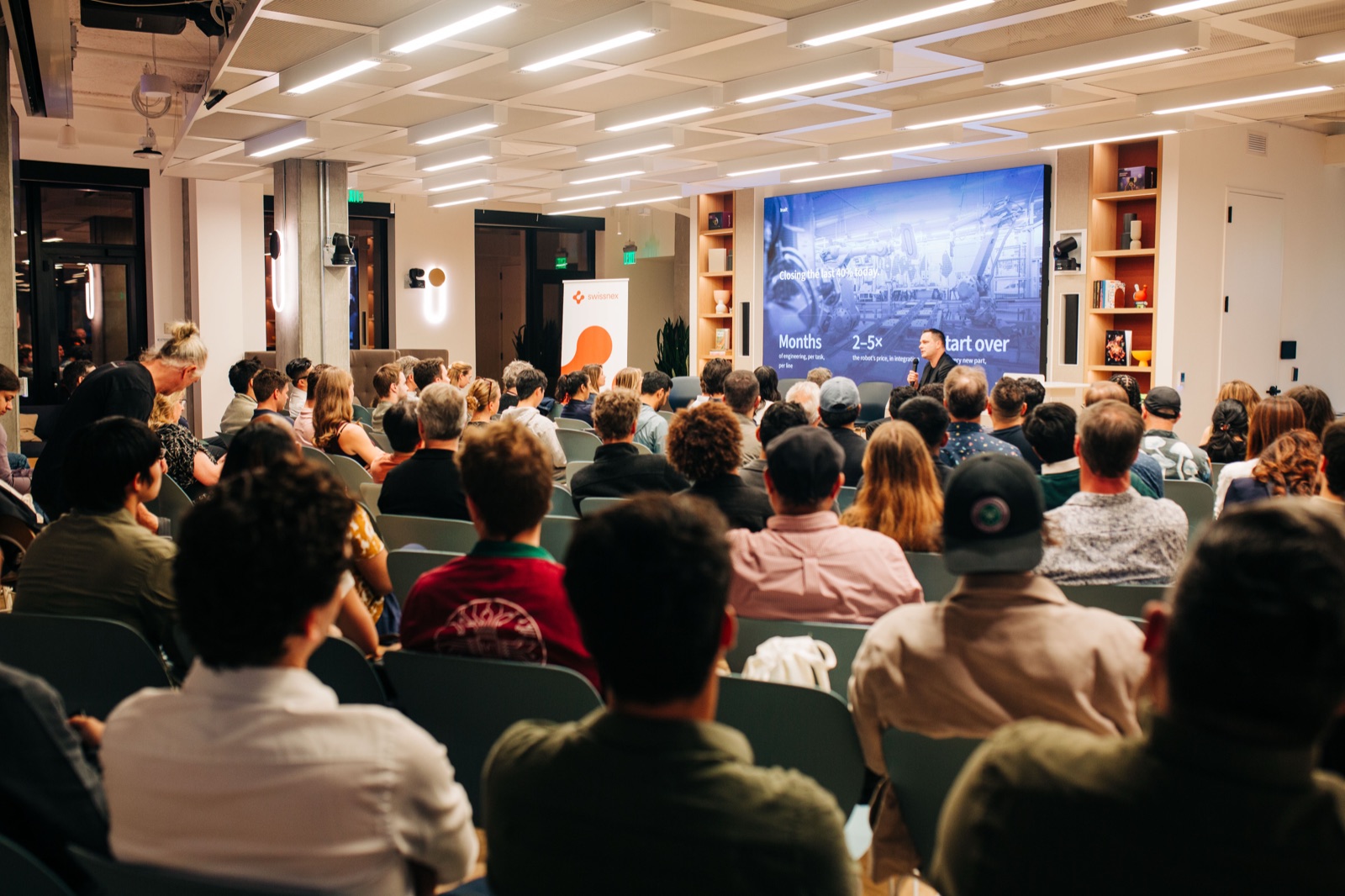
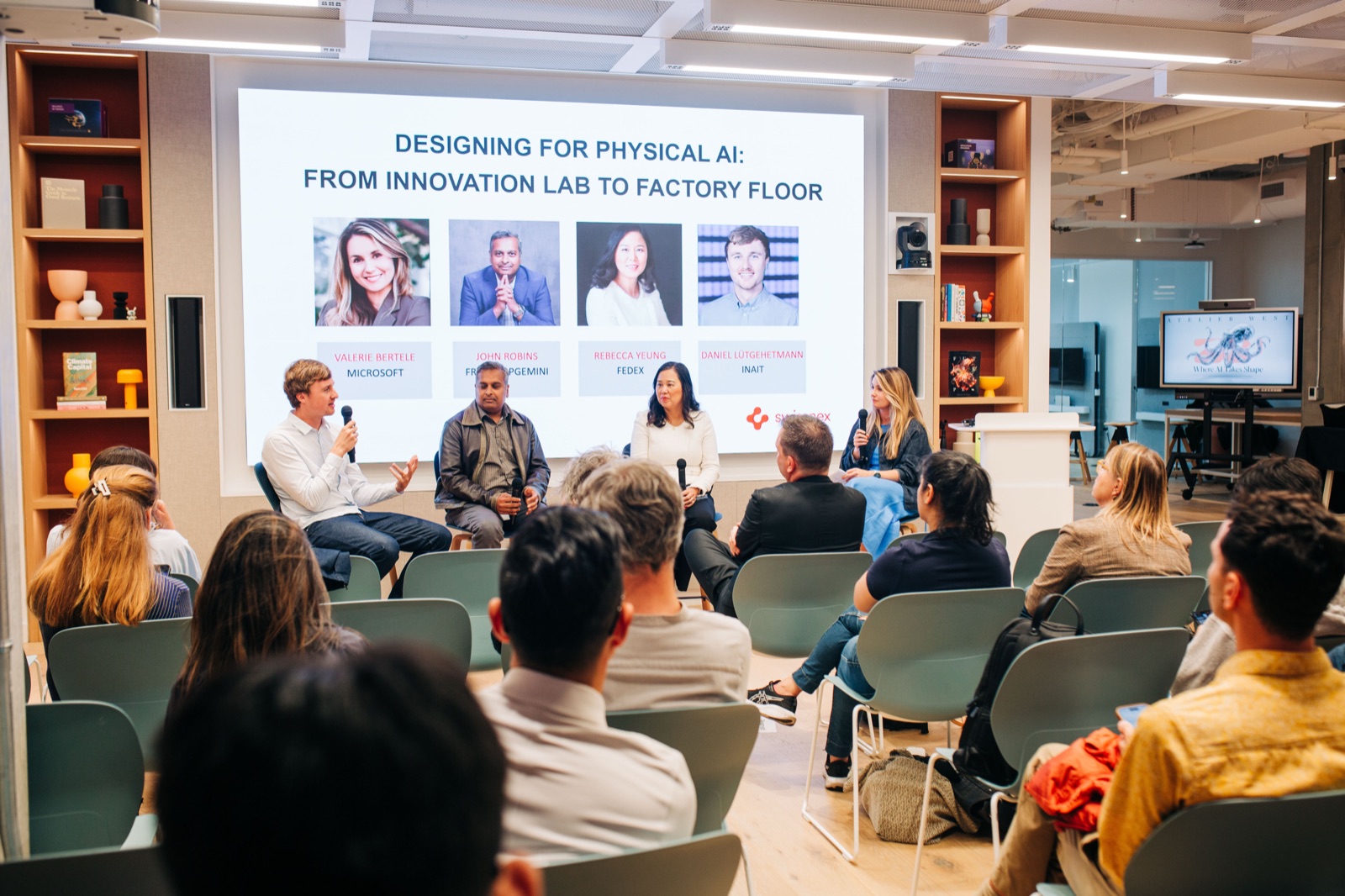
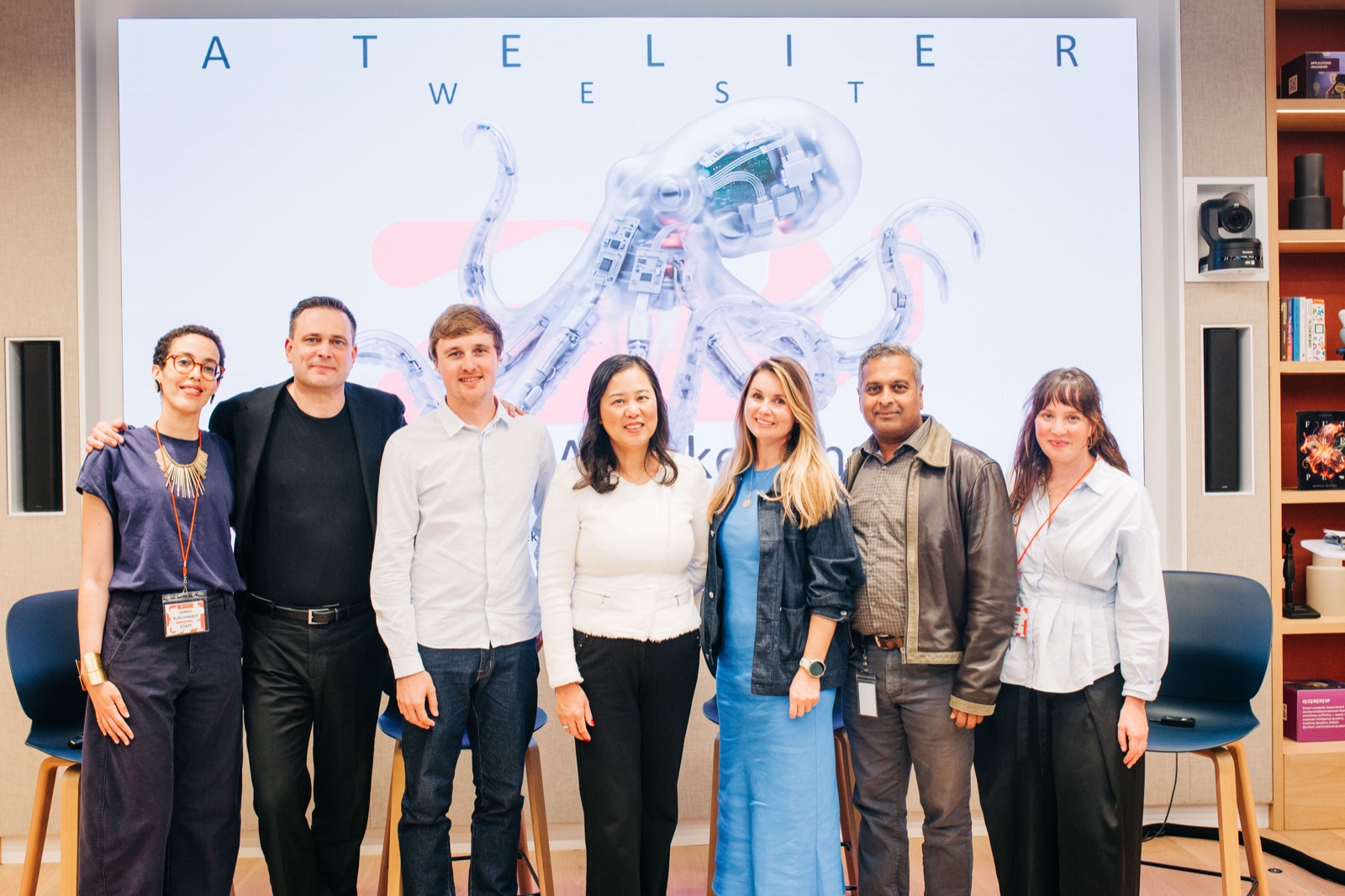
How does physical AI get from the innovation lab to the factory floor? CEO Richard Frey’s keynote focused on Inait’s fast-learning physical AI for robots that produce production-grade results in advanced manufacturing today. CTO Daniel Lütgehetmann joined a panel discussing different aspects of what it takes for physical AI to create value in the real world, with John Robins (Head of Physical AI, Capgemini) and Rebecca Yeung (former VP Advanced Technology, FedEx), moderated by Valerie Bertele (Microsoft).
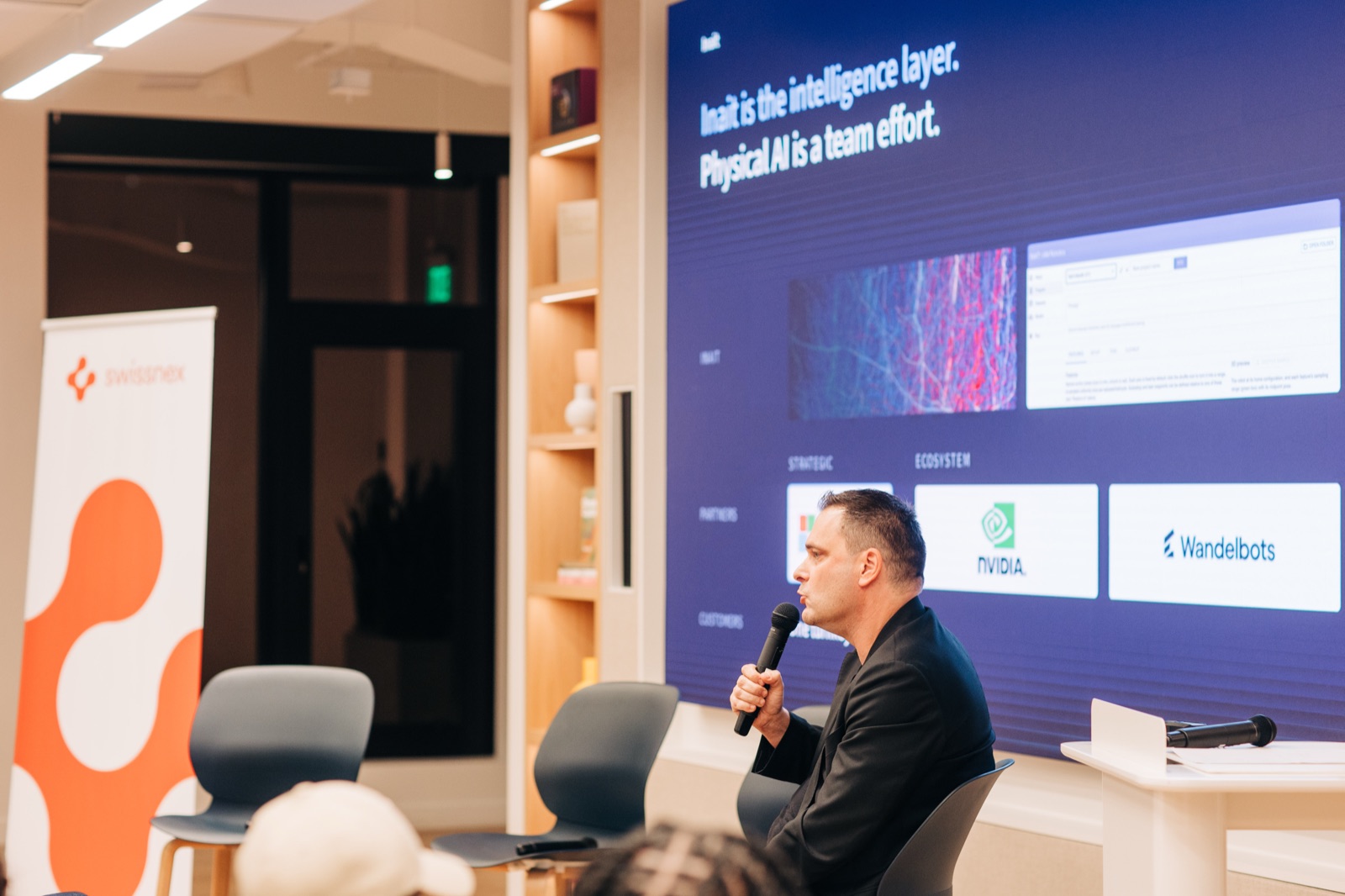
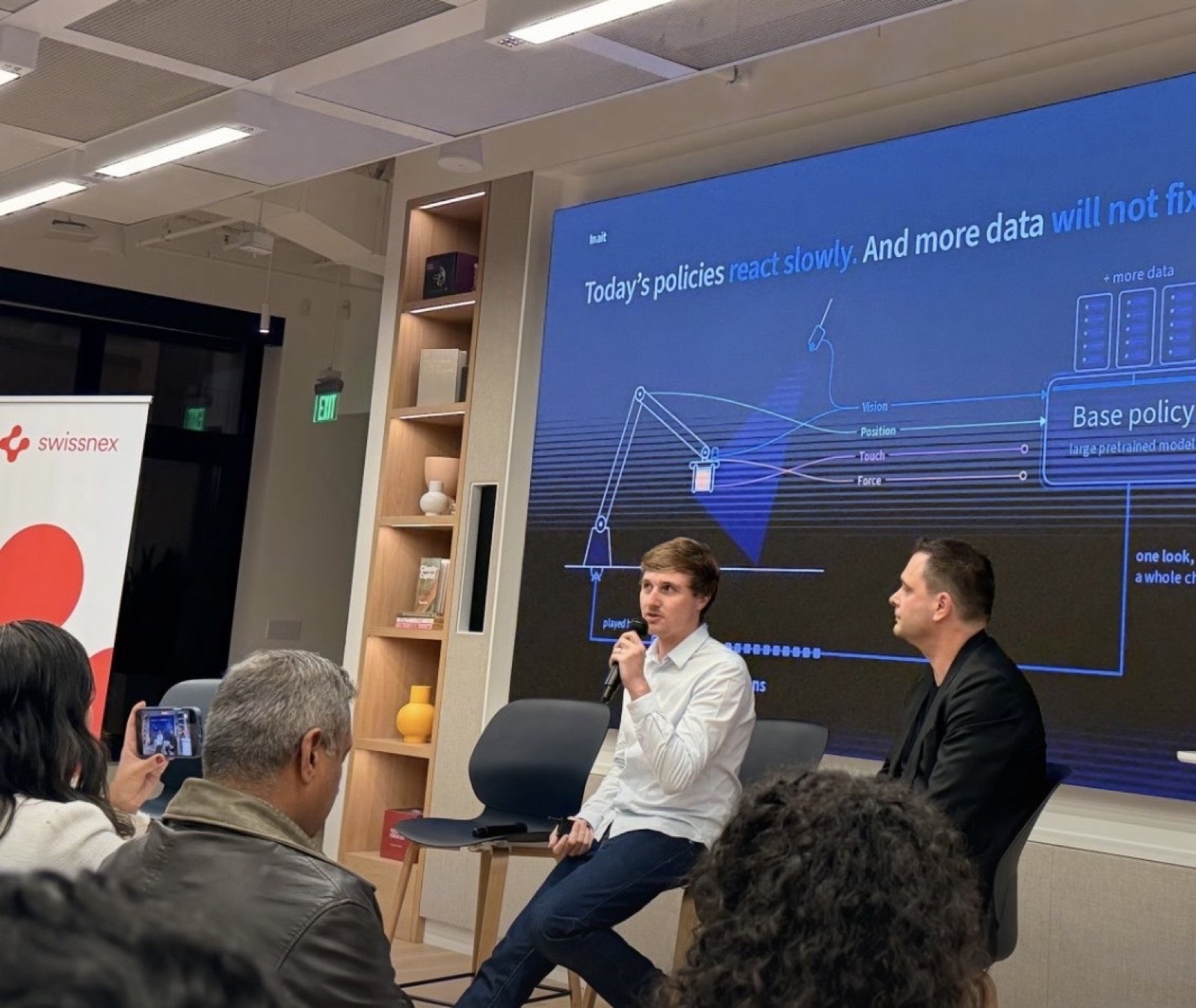
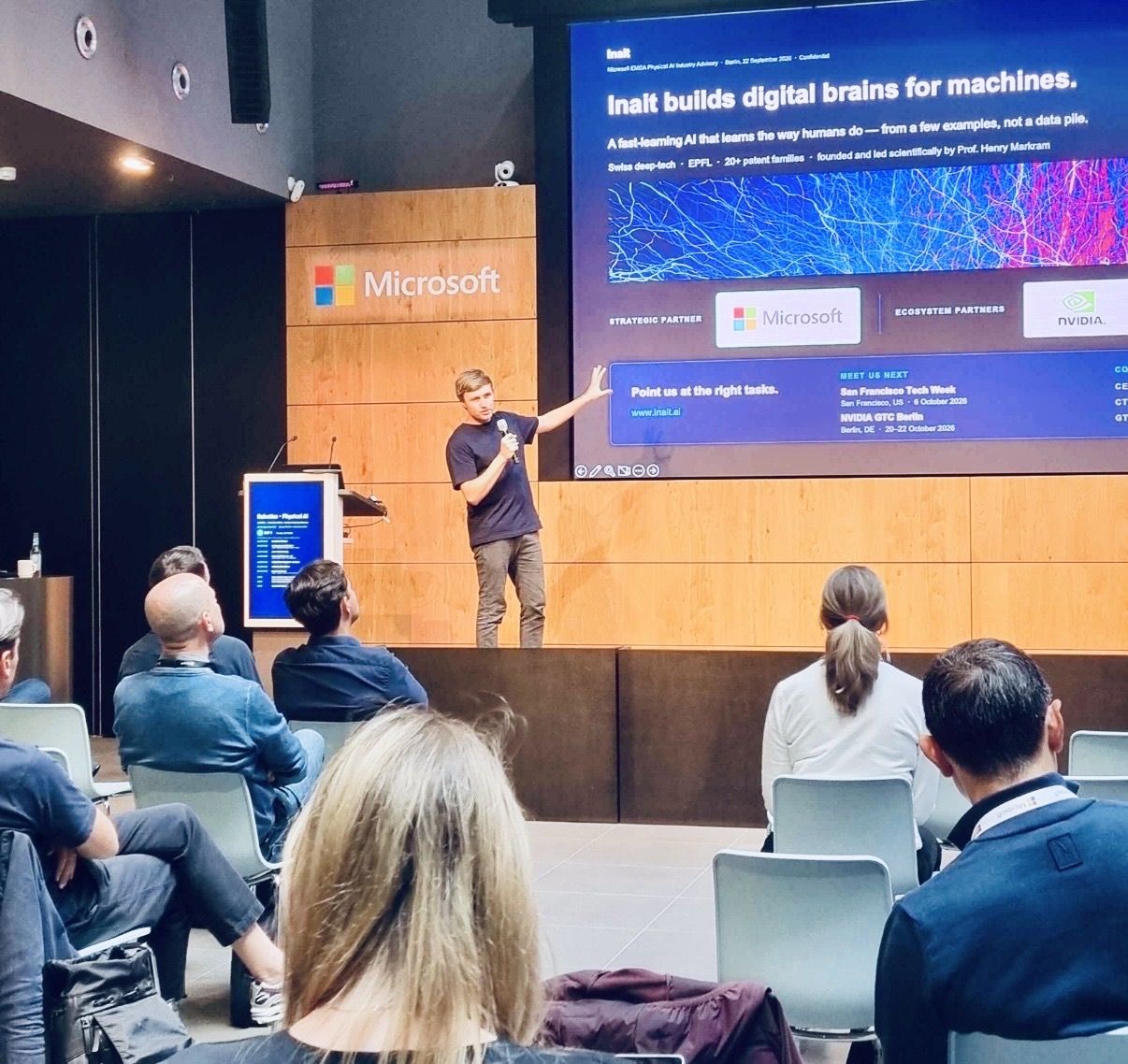
CTO Daniel Lütgehetmann presented Inait’s fast-learning physical AI to Microsoft’s EMEA Physical AI Industry Advisory in Berlin: an AI that learns the way humans do, from a few examples rather than a data pile, and takes industrial robots from base-policy results to production-grade reliability on the customer’s own cell.
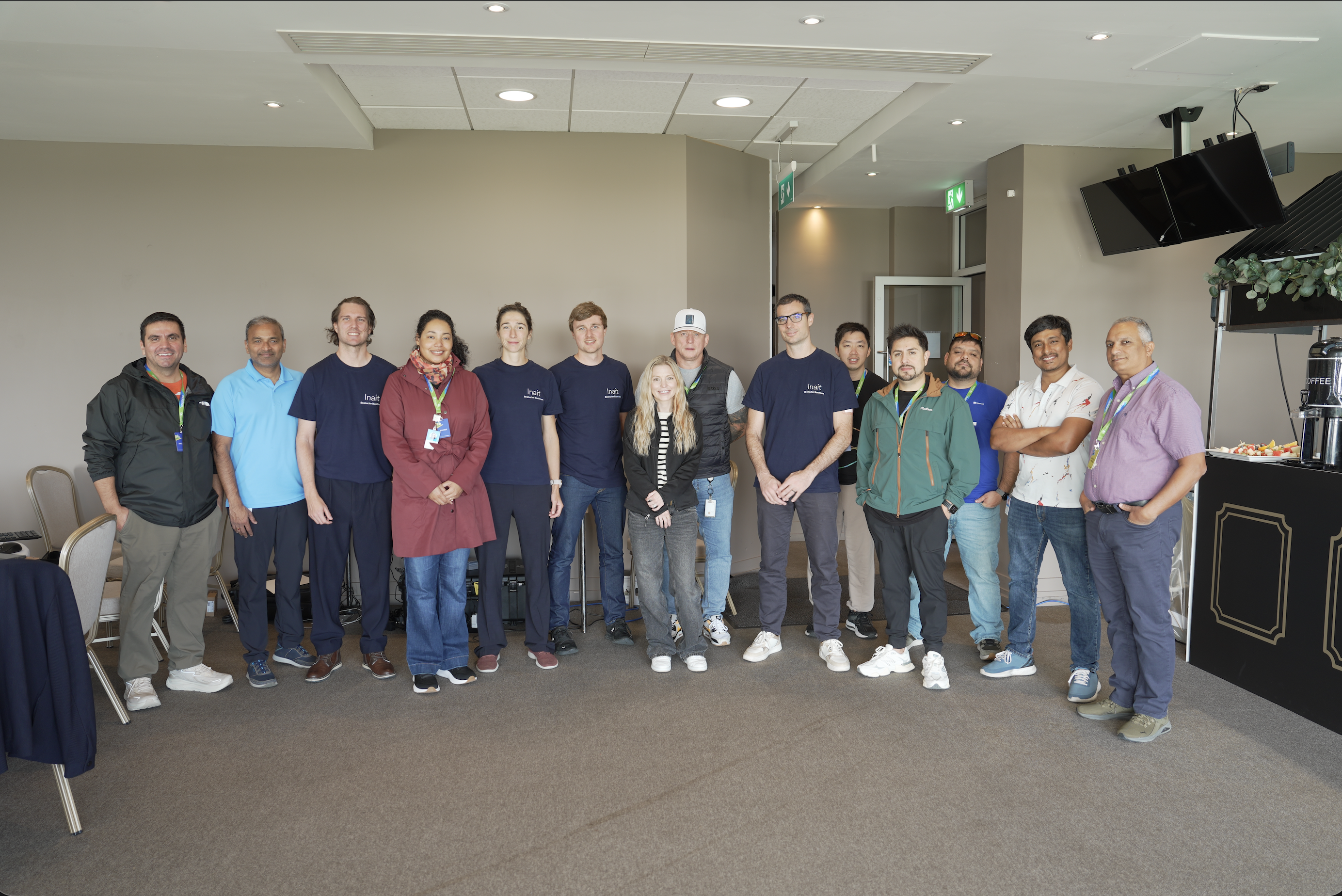
Three days with Microsoft's Physical AI team at the biggest hackathon in the world. The heavy foundation policies ran in Microsoft Azure AI Foundry, with a lightweight Inait model on site, no GPU, correcting the degradation caused by cloud latency. For customers, that removes the local GPU as a prerequisite for a robot cell.
Unstructured pick-and-place for a European manufacturer, whose own automation attempt had plateaued around 60%. On their UR20, with parts the model had never seen in the real world, Inait reached 99% in simulation and 98% on the cell, within the 10 mm tolerance required, in under 24 hours of robot time. Pilot to production, early 2027.
Gear pick-and-place for a Microsoft industry customer, where their engineers' efforts in fine-tuning had plateaued at 65%. Same robot, same task, same room: 100%, fully autonomous, set up in under 24 hours of robot time.
The partnership covers co-productization, co-selling, joint research and access to Azure compute. Robotics is the first vertical.
"Microsoft teams up with AI start-up to simulate brain reasoning."
Financial Times · headline Interview of the week: Henry Markram on brain-based AGI Read →
  Microsoft teams up with AI start-up to simulate brain reasoning Read → Same article as PDFPDF →
  The Open Brain Institute announces the dawn of a new frontier in neuroscience Read →
  Henry Markram at Davos: the dawn of digital brains Watch →
 What we measured, where, and what comes next. Only when there is something real to share.